


Ten Classic Pitfalls When Writing About Science and Scientists
Below is a short list of clichés, stereotypes, common mis-representations and 'challenges' facing writers who wish to represent science or the scientist in fiction, film and TV.
1. The Classic Mad Boffin
- or any variation thereof: cold, clinical, amoral, autistic or otherwise unconnected individuals or, worse, scientists driven by ego-mania or a thirst for power. With our without the big hair.
E.g. Faust, Dr Frankenstien, Roptwang (Metropolis), Dr X, Dr Strangelove, Dr. Brackish Okun (Independence Day), Dr Octopus (Spiderman), Walter Bishop (Fringe), etc, etc, etc.
2. The Scientist as Hero
- any hagiography that squeezes the scientist into the American 'cowboy' archetype - i.e. a maverick, fighting against the system. A subset of this is the 'Scientist as Cassandra', making unheeded warnings about the world being on a collision course with disaster, until it's almost too late whereupon, at the last minute, they're appreciated and save the day.
E.g. Dr Robert Stonehill (Harrison Ford) in
Extraordinary Measures, David Levinson (Jeff Goldblum) in
Independence Day, Jack Hall (Denis Quad) in
The Day After Tomorrow, etc.
3. The Scientist as All Too Human
- a new development, thanks to Ian McEwan's Michael Beard character in new novel 'Solar'.
N.B. In addressing the first 'mad boffin' stereotype it is easy to over-compensate. Strictly speaking the only difference between a scientist and a non-scientist is the former does science!
4. Lab-Space Clichés
No doubt because real laboratories are so dull, scientists' workplaces are always OTT affairs in popular SF. So avoid setting your labs in dungeons, castles, far below the Earth's surface, in the sides of volcanoes, in high-security bio-hazard research plants, in the middle of the Arizona desert, etc.
Also avoid simply exaggerating the scale and resources available to scientists in reality.
5. Omission of the Unknown and the Uncertain
In films especially, the hired scientist always has an answer (which the non-scientist characters agree with or not, according to plot needs). And it's always a very singular explanation. We never hear scientists talking about things that remain unknown, areas of doubt and darkness where uncertainty reigns (infinitely large areas in fact!). We never hear about alternative explanations - theory X, theory Y - namely the bread and butter of scientific debate. Alternatives and doubt get discarded by the narrative need for economy, as well as the fact that the scientist only ever really constitutes one character (with one role) - i.e. as a token, a spokesperson for the entire scientific community. Consequently that community's plurality of opinion is reduced to a singular one.
6. The Spaceman (Connecticut Yankee) in King Arthur's Court
Stephen Jay Gould talked of the way scientists and innovators in history are generally portrayed as akin to visitors from the future: individuals blessed somehow with our current insights, and born before their time. Hence Leonardo Da Vinci is like the Spaceman at King Arthur's Court, inventing helicopters, and coming up with 'from-the-future' theories about the fossil record and the like. When in reality, they employed entirely of-their-time thinking (Da Vinci's fossil theory followed the mediaeval concept that the planet worked like a human body), and through chance and endeavour they occasionally made breakthroughs - which we've now incorporated into the very different thinking of our time. In short, do not use dramatic irony - where the 'scientist' winks and nods at the reader, sharing a secret knowledge. Such pioneers were as uncertain as their fellow, less successful peers.
This is a key point for considering historical fiction applications to the history of science. Present-day scientists will not be wearing the same head-sets as the historical forefathers. And history has nothing on science when it comes to being (re-)written by the victors.
7. The Idealised Case
Scientists, when talking about experiments, proofs, demonstrative examples, and all aspects of what they do... generally idealise, massively! The closed conditions or ideal reference frame has no energy leakage, no contamination, no interference from the measuring process itself (except for QM), and as a result, scientists, in the pursuit of the ideal deductive-nomological explanation, generally avoid talking about any of the real-world practicalities of what they ACTUALLY do: the tangible details, the day to day adjustments, the reality of the lab. This has surely been a contributing factor to the general misunderstanding of science! Despite the best intentions behind it.
8. Science as Wishfulfillment
Writers, and film-producers especially, often go to science to make a pre-determined idea of theirs plausible. Often this means slapping on a nebulous scientific explanation - like radiation in the 1950s or nanotechnology today - to cover up for an idea that is untenable. Do not map the science onto the original idea. It doesn't work that way! Instead use science to craft your ideas in the first place.
9. Pseudo Science
Time travel, interstellar space travel, artificial gravity, etc - are all far beyond the realms of real science (certainly within the next 500 years). But are obviously uber-convenient devices to serve the story-tellers' needs. This is not science!
10. Non Science
The exception that proves the rule. Note: There is nothing wrong with non-science! Events happen in a great many pieces of speculative film and fiction, that are not given scientific or even pseudo-scientific explanations: triggers or set-ups that just occur arbitrarily, and don't have to satisfy the author's desire to explain everything. For example, the sudden infertility that besets all mankind in P.D. James'
Children of Men (adapted by director Alfonso Cuarón) - this goes unexplained, as does the sudden arrival of fertility at the end - but through it the author is able to say a great deal about the way society as a whole might respond. And the reason we don't feel cheated, the reason it actually feels realistic, scientifically, despite a lack of explanation is quite simple: that's the order in which it would happen. In a Hollywood disaster movie, the 'Scientist as Cassandra' would have all the answers as to how we could escape the comet plummeting towards us, or avoid the climate disaster; an expert with all the answers will be obediently waiting in the wings (with family issues and subplots to boot). In reality, a disaster will strike (like the bubonic plague, like Aids) that will have us, and the whole scientific community, at a loss. To this extent, Deus ex Machina - chance developments for good and bad like the Martian-killing bacteria at the end of
War of the Worlds, will be closer to scientific verisimilitude than any Hollywood disaster movie. What's important, in these types of stories, given the arbitrary set-up is the depth and believability of what follows, how society and individuals respond.
Compiled with the assistance of Dr David Kirby (Lecturer in Science Communication Studies, University of Manchester)
(c) Comma Press
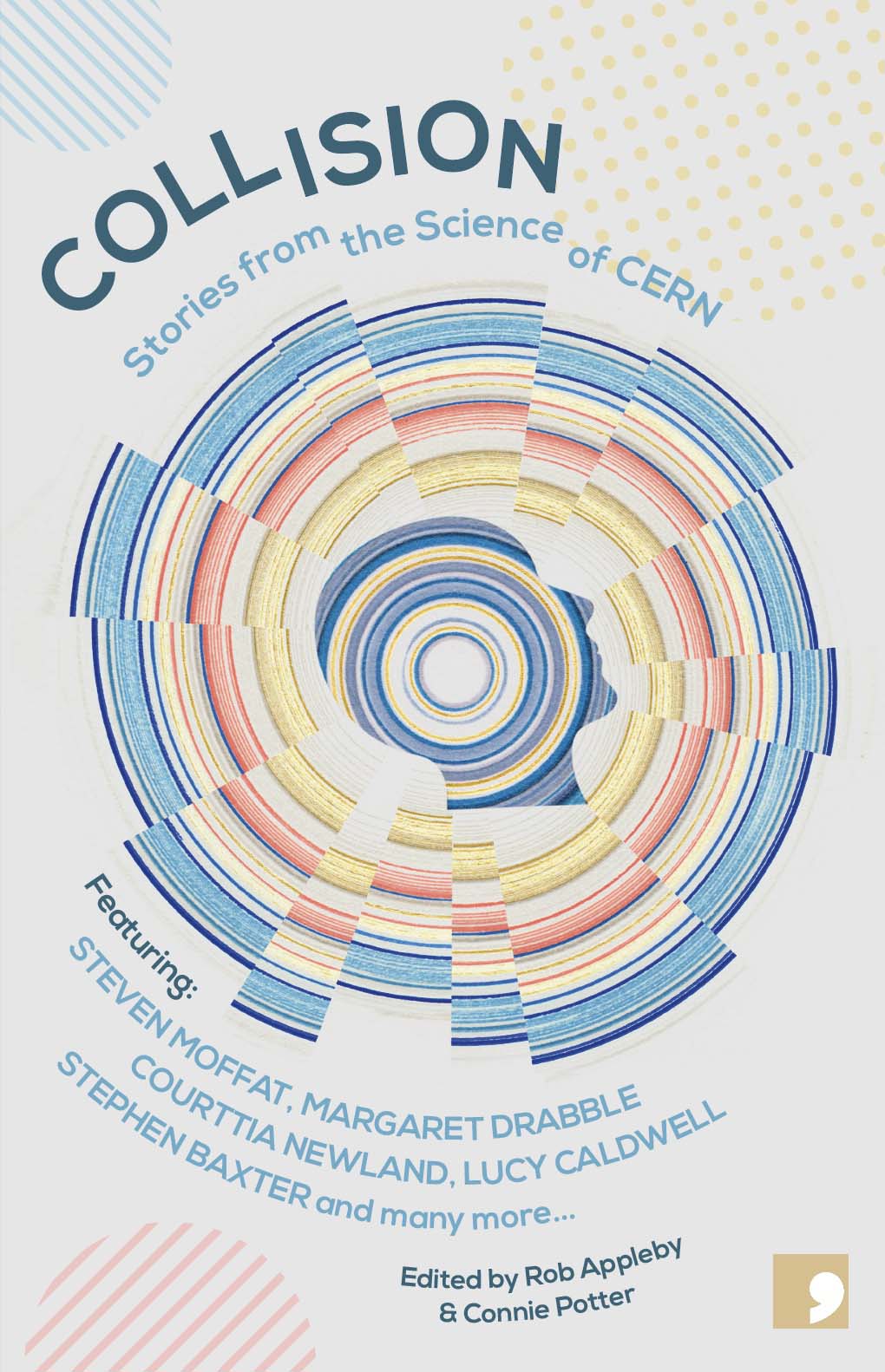
More about Comma's first Science-into-Fiction anthology
here>>.
Supported by the Institute of Physics.